Overview
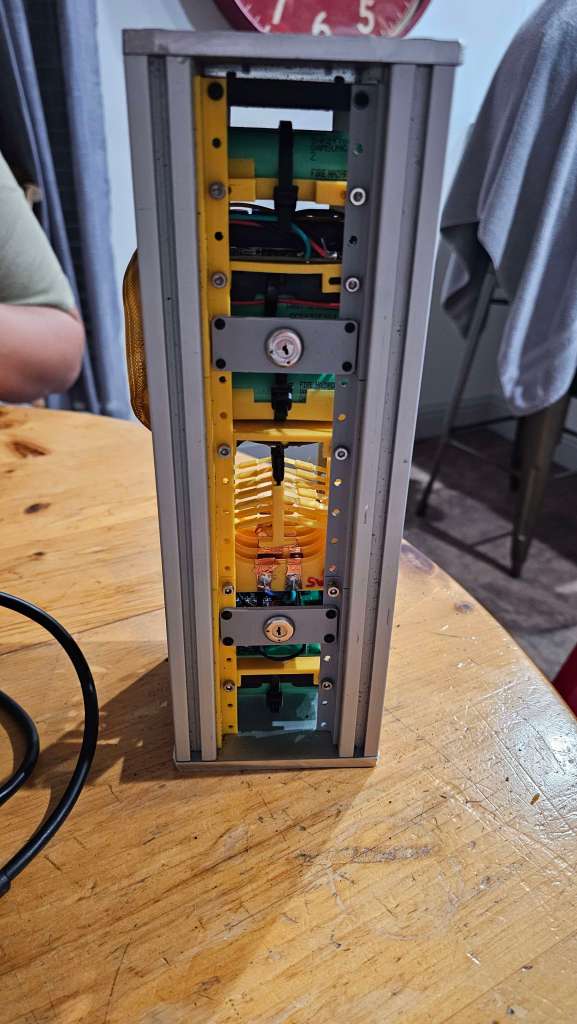
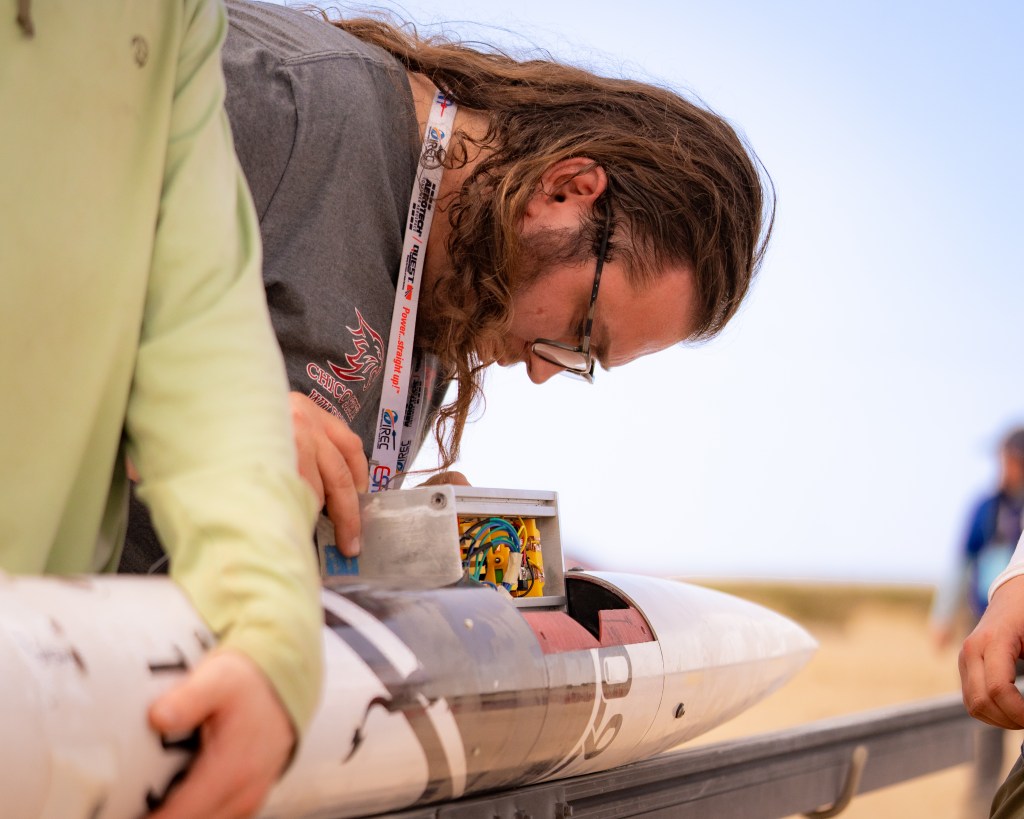
This project involved the design and flight testing of an experimental rocket payload built to investigate the behavior of bi-stable mechanical switches in high-acceleration environments. Bi-stable devices exhibit two stable equilibrium positions, “on” and “off”, and require a precise actuation force to transition between states.
The goal of the experiment was to determine whether these switches could be reliably actuated and controlled during the dynamic conditions of a rocket launch, and to characterize the relationship between acceleration forces and switch actuation.
Technical Objective
The experiment centered on:
- Refining the geometry of a custom bi-stable switch
- Characterizing its actuation force
- Measuring in-flight acceleration
- Correlating acceleration data with switch state transitions
- Evaluating reliability in unstable, high-G environments
By applying Newton’s Second Law (F = ma) and knowing the mass of the internal shuttle mechanism, we aimed to calculate the force responsible for each actuation event.
System Architecture
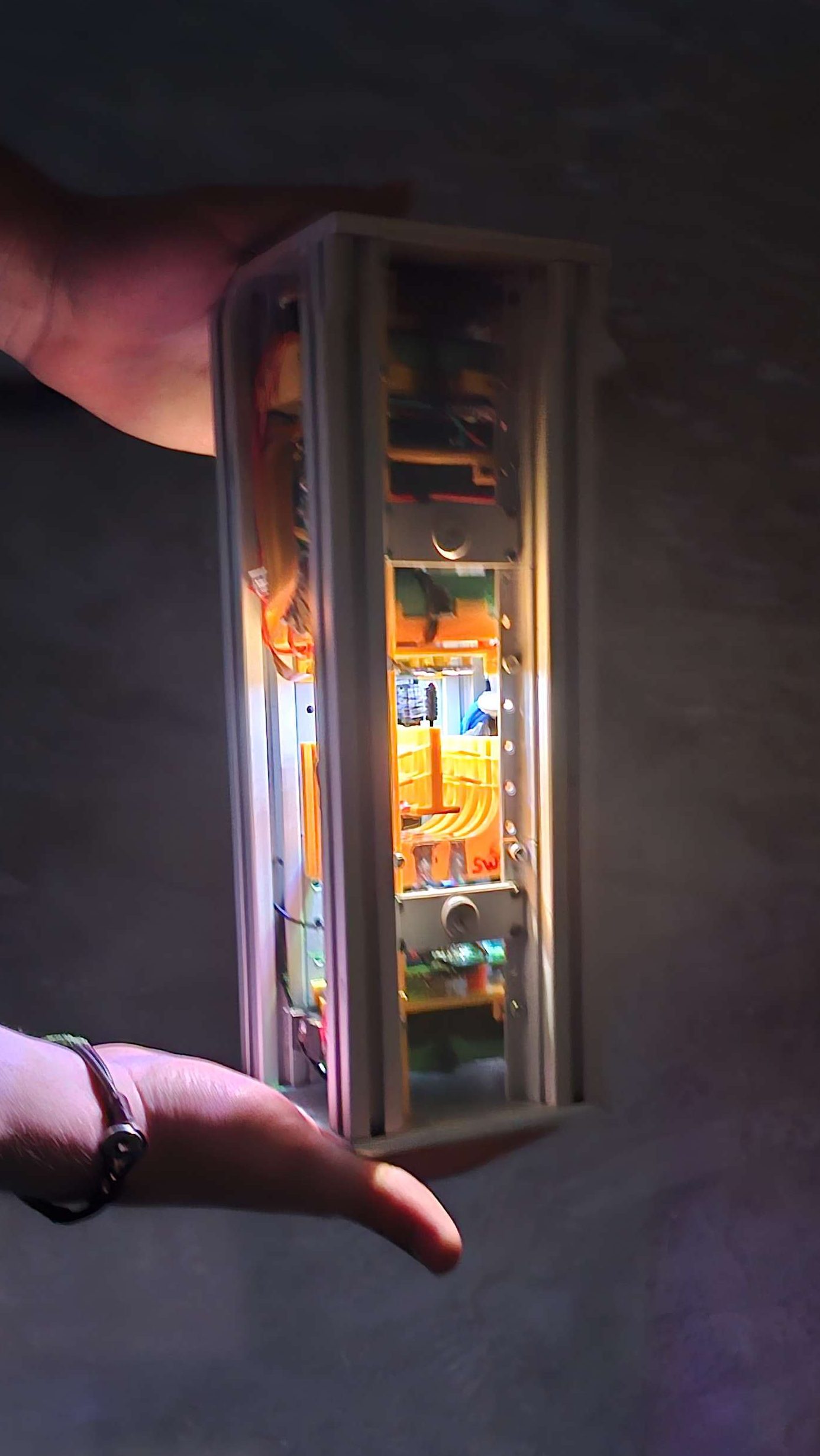
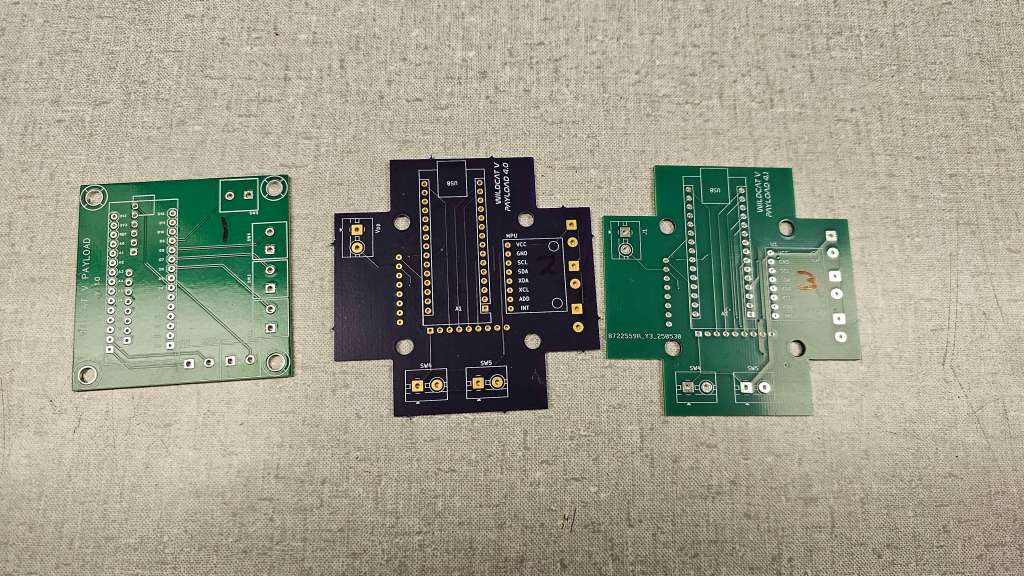
The payload consisted of two independent electrical subsystems:
Upper Subsystem – Visual Confirmation
- Raspberry Pi
- Pi Camera module
- Internal LED lighting
This subsystem provided real-time visual confirmation of switch transitions and served as a redundancy mechanism in case electrical detection failed.
Lower Subsystem – Data Logging & Force Analysis
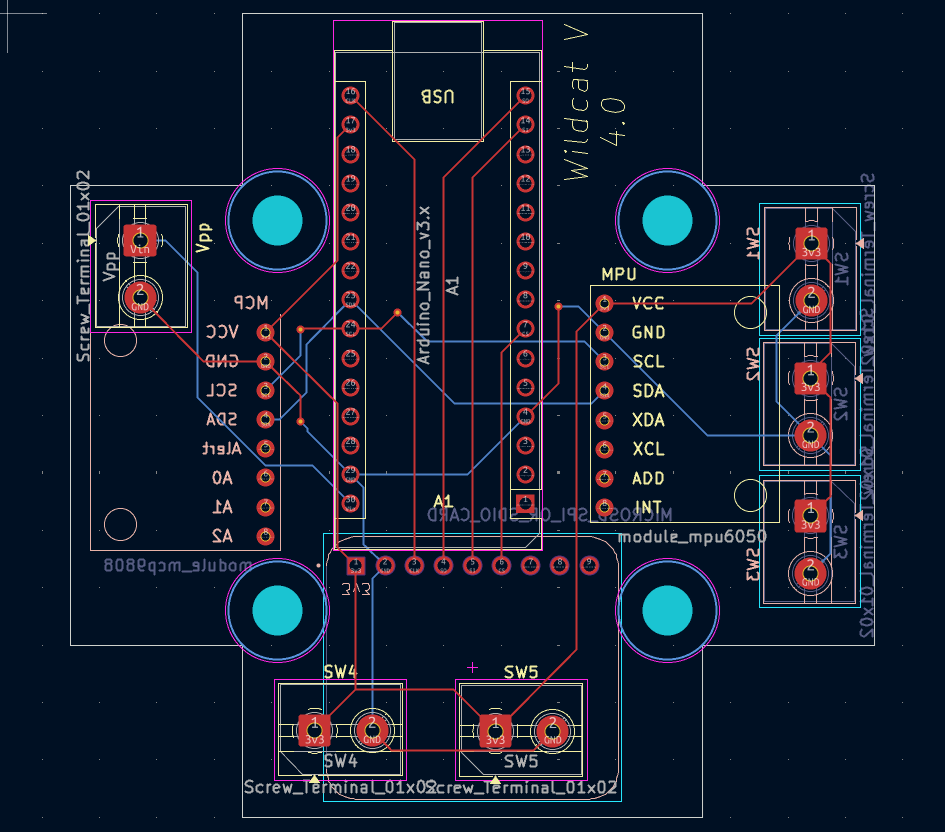
- Custom-designed PCB
- Arduino microcontroller (programmed in C)
- Accelerometer
- Independent battery supply
This subsystem recorded:
- Accelerometer data during flight
- Electrical contact closures when switches actuated
- Time-correlated event logging for force calculation
Both systems operated independently to improve reliability and fault tolerance.
Designed the custom PCB used for the data acquisition system
Explored PCB fabrication methods including:
- 3D-printed PCB prototyping
- Precision copper plate milling
Programmed the Arduino in C
Implemented real-time flight data logging
Successfully recorded and recovered flight acceleration data
Verified post-flight bi-stable switch actuation capability through ground testing
Flight Results
During the rocket flight:
- The system successfully recorded acceleration and system data.
- The bi-stable switches did not actuate in-flight.
- Post-flight analysis determined that the rocket did not reach the required G-force threshold to trigger the switches.
- Subsequent ground testing confirmed that the switches were capable of actuating at the expected force levels.
While in-flight actuation did not occur, the experiment successfully validated:
- Data acquisition integrity
- Electrical detection system reliability
- PCB and microcontroller performance under launch conditions
- Proper correlation between acceleration data and expected force thresholds
Engineering Challenges
- Designing electronics capable of surviving high vibration and acceleration
- Ensuring clean electrical contact detection in a dynamic environment
- Providing redundant validation (electrical + visual)
- Isolating subsystems for independent operation and fault tolerance
- Prototyping custom PCBs using multiple fabrication methods
 Carter Trudeau